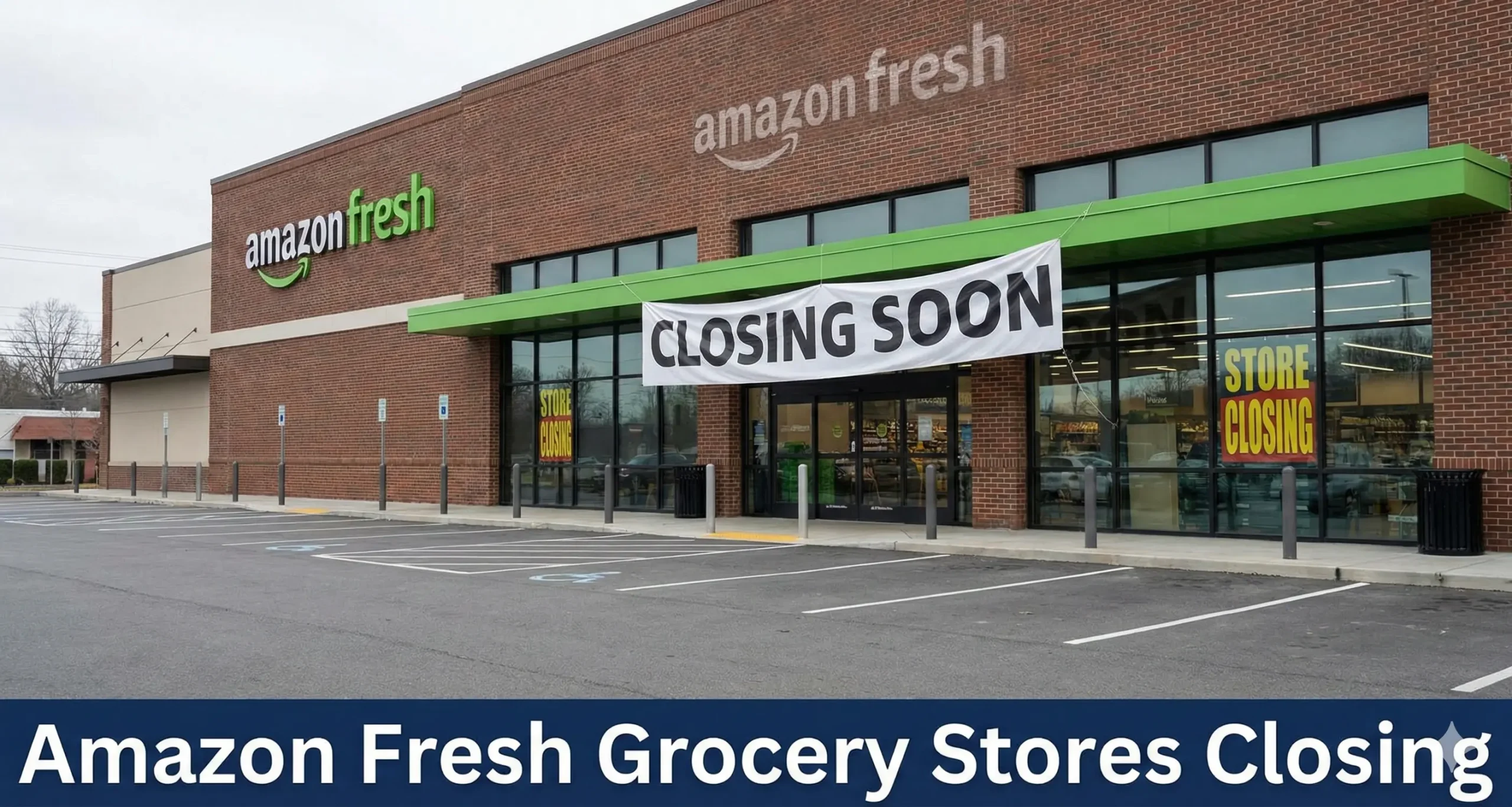
If you’ve recently searched “amazon fresh grocery stores closing”, you’re not alone. Many shoppers across the United States have noticed Amazon Fresh locations shutting down, scaling back, or feeling noticeably different than before. This has raised valid concerns: Is Amazon exiting physical grocery stores? Will prices go up? What happens to delivery, returns, and in-store perks?
This guide breaks it all down in plain, human language no hype, no speculation, and no confusing corporate jargon. By the end, you’ll clearly understand why Amazon Fresh grocery stores are closing, who it affects, and what smart shoppers should do next.
What Is Amazon Fresh and Why It Mattered to Shoppers
Amazon Fresh was launched as a modern grocery concept combining:
- Cashierless or low-touch checkout
- Competitive pricing on everyday groceries
- Seamless integration with Amazon accounts
- Same-day delivery and in-store pickup
For many US shoppers, Amazon Fresh promised a tech-driven alternative to traditional grocery chains—especially in urban and suburban areas.
So when closures started happening, it naturally raised alarms.
Are Amazon Fresh Grocery Stores Really Closing?
Short answer: Yes—but not all of them.
Amazon is selectively closing underperforming Amazon Fresh grocery stores, mainly in certain US cities. This is not a nationwide shutdown, and Amazon is not abandoning groceries entirely.
Instead, this is a strategic reset.
Some locations remain open, some are being redesigned, and others are closing permanently. The key takeaway: Amazon is rethinking how physical grocery stores fit into its long-term strategy.


Why Are Amazon Fresh Grocery Stores Closing?
Let’s break this down into clear, real-world reasons.
1. Physical Grocery Stores Are Expensive to Run
Running a brick-and-mortar grocery store involves:
- High rent and property costs
- Staffing and training expenses
- Inventory management and food waste
- Utilities, logistics, and compliance
Even for a giant like Amazon, not every store becomes profitable—especially in competitive grocery markets.
2. Fierce Competition in the US Grocery Market
Amazon Fresh entered a market dominated by:
- Long-established grocery chains
- Discount retailers
- Regional supermarkets with loyal customers
Many shoppers still prefer familiar stores with weekly deals, local brands, and predictable layouts. Amazon Fresh didn’t always offer a strong enough reason to switch.
3. Technology Didn’t Always Match Shopper Expectations
Cashierless and app-based shopping sounded exciting—but in reality:
- Some customers found it confusing
- Others disliked account-linked shopping
- Technical glitches created frustration
Innovation is powerful, but grocery shopping is habit-based. Too much change can slow adoption.
4. Shift Toward Online Grocery and Delivery
Amazon’s strongest grocery advantage remains:
- Online ordering
- Same-day and next-day delivery
- Subscription-based shopping
Instead of investing heavily in physical stores, Amazon appears to be doubling down on digital grocery experiences, where margins and scalability are often better.
5. Performance-Based Closures (Not Panic Closures)
This is important:
Amazon is not closing stores because of failure, but because of optimization.
Underperforming locations are being cut so Amazon can:
- Improve remaining stores
- Test new formats
- Reduce losses
- Reallocate resources
This is a business correction—not a collapse.
Step-by-Step: What Happens When an Amazon Fresh Store Closes?
If you live near a closing Amazon Fresh location, here’s what typically happens:
Step 1: Store Announcement
Customers may see:
- In-store notices
- Reduced inventory
- Shortened operating hours
Step 2: Clearance Sales
Before closing, many stores:
- Discount groceries
- Sell remaining inventory quickly
Step 3: Store Shutdown
The location closes permanently or pauses operations.
Step 4: Online Services Continue
In most cases:
- Amazon grocery delivery continues
- Amazon Fresh online ordering remains active
- Your Amazon account is unaffected
Real-Life Use Cases: How Closures Affect Different Shoppers
Case 1: Urban Apartment Dwellers
Many relied on nearby Amazon Fresh stores for:
- Quick grocery runs
- App-linked shopping
Impact:
Slight inconvenience—but delivery options usually replace in-store shopping.
Case 2: Families Using Weekly Grocery Pickup
Some families preferred:
- Scheduled pickup
- Predictable pricing
Impact:
They may switch to other pickup-friendly grocery chains or continue online orders.
Case 3: Budget-Focused Shoppers
Amazon Fresh pricing was competitive but not always the cheapest.
Impact:
Many shoppers return to discount supermarkets without major disruption.
Pros and Cons of Amazon Fresh Grocery Stores Closing
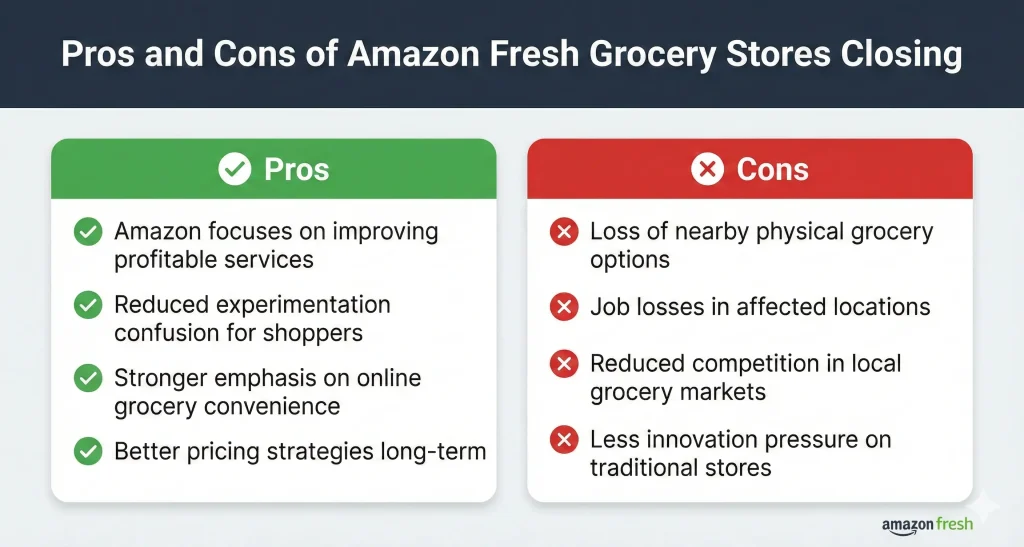
✅ Pros
- Amazon focuses on improving profitable services
- Reduced experimentation confusion for shoppers
- Stronger emphasis on online grocery convenience
- Better pricing strategies long-term
❌ Cons
- Loss of nearby physical grocery options
- Job losses in affected locations
- Reduced competition in local grocery markets
- Less innovation pressure on traditional stores
Common Mistakes People Make When Reacting to Closures
Mistake 1: Assuming Amazon Is Leaving Groceries Completely
This is false. Grocery remains a core category for Amazon—just not always via physical stores.
Mistake 2: Panic-Switching Accounts or Subscriptions
Your Amazon account, Prime benefits, and grocery delivery options are not automatically affected.
Mistake 3: Ignoring Online Alternatives
Many shoppers forget that Amazon Fresh still works digitally—even if the store nearby is gone.
Mistake 4: Overestimating Price Increases
Store closures don’t automatically mean higher prices. In some cases, pricing becomes more competitive online.
What This Means for the Future of Grocery Shopping in the US
The closures signal a bigger trend, not just an Amazon decision:
- Physical grocery stores must justify their footprint
- Convenience and delivery matter more than store size
- Shoppers value simplicity over flashy tech
- Hybrid models (online + pickup) are winning
Amazon Fresh closures reflect how consumer behavior is evolving, not shrinking.
FAQ: Amazon Fresh Grocery Stores Closing (10–12 Common Questions)
1. Why are Amazon Fresh grocery stores closing in the US?
Amazon is closing underperforming locations to optimize costs and focus on more profitable grocery strategies.
2. Is Amazon shutting down all Amazon Fresh stores?
No. Closures are selective, not nationwide.
3. Will Amazon Fresh delivery stop?
No. Online grocery delivery continues in most regions.
4. Does this affect Amazon Prime benefits?
No. Prime memberships and benefits remain unchanged.
5. Are prices going to increase because of closures?
Not necessarily. In some cases, online pricing improves.
6. Are employees losing jobs?
Unfortunately, some store closures do result in job losses or relocations.
7. Will closed stores reopen later?
Some locations may reopen in new formats, but many are permanent closures.
8. Can I still return Amazon items at Amazon Fresh?
Return policies depend on location availability. Other return options remain.
9. Is Amazon focusing more on online groceries now?
Yes. Online grocery ordering and delivery remain a priority.
10. Are cashierless stores failing?
Not entirely—but adoption has been slower than expected.
11. Will Amazon launch a new grocery store concept?
Amazon continues to test new formats, but details evolve over time.
12. What should shoppers do now?
Explore online grocery options, compare pricing, and stay flexible.